Colorful reef fish, butterflyfish, angelfish, parrotfish, surgeonfish and clownfish at suitable shallow reefs.
// HURGHADA · RED SEA FIELD GUIDE
Marine Life in Hurghada: A Complete Red Sea Guide
Meet the reef before your mask touches the water. Discover the fish, corals, dolphins, turtles, rays and small hidden creatures you may encounter while snorkeling around Hurghada.
// WHAT TO EXPECT
A living reef, never a scripted show
Hurghada gives snorkelers access to coral gardens, reef edges, sandy lagoons, seagrass habitat and open-water channels. Each habitat attracts a different community, so sightings change with the site, season, sea state and simple luck.
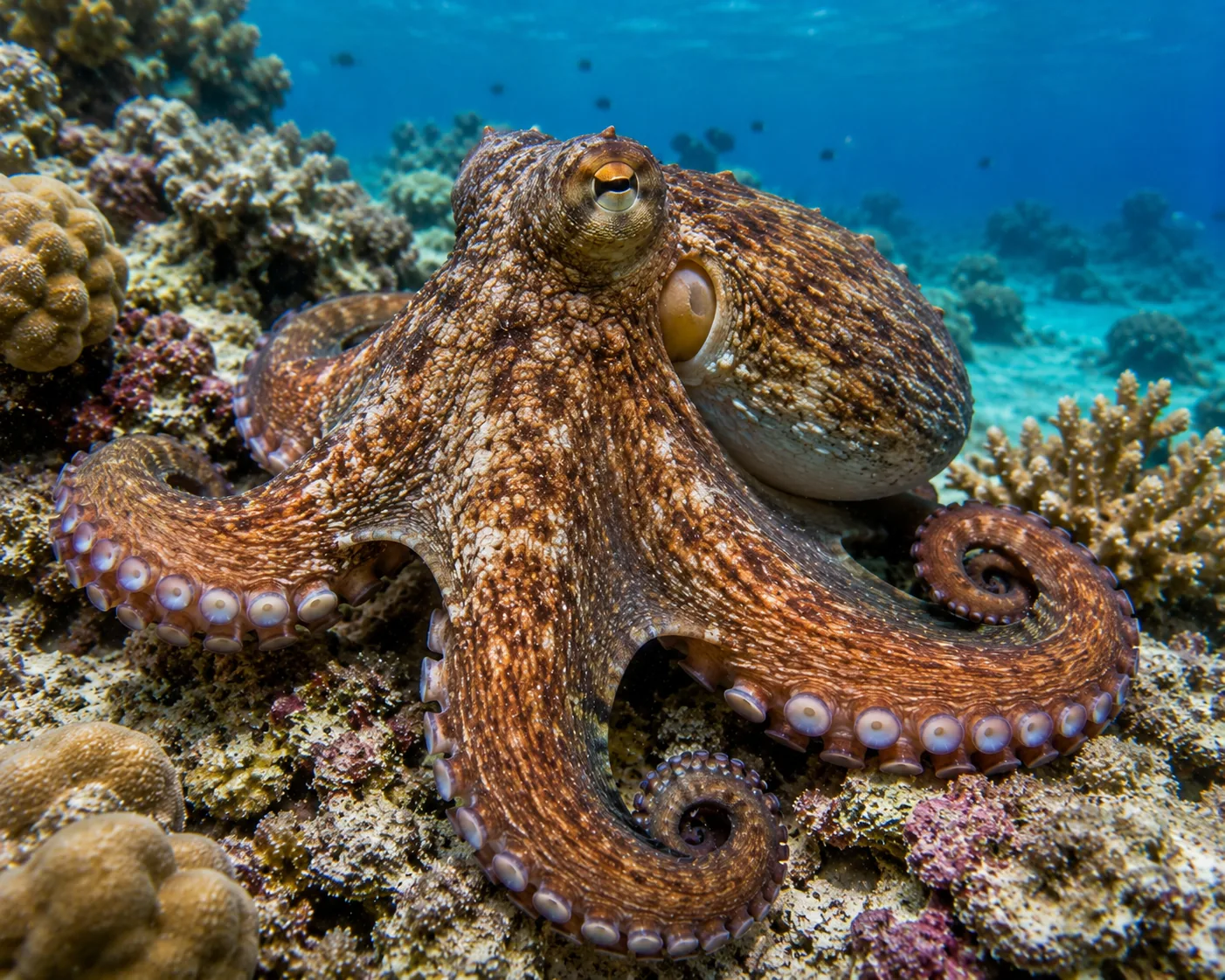
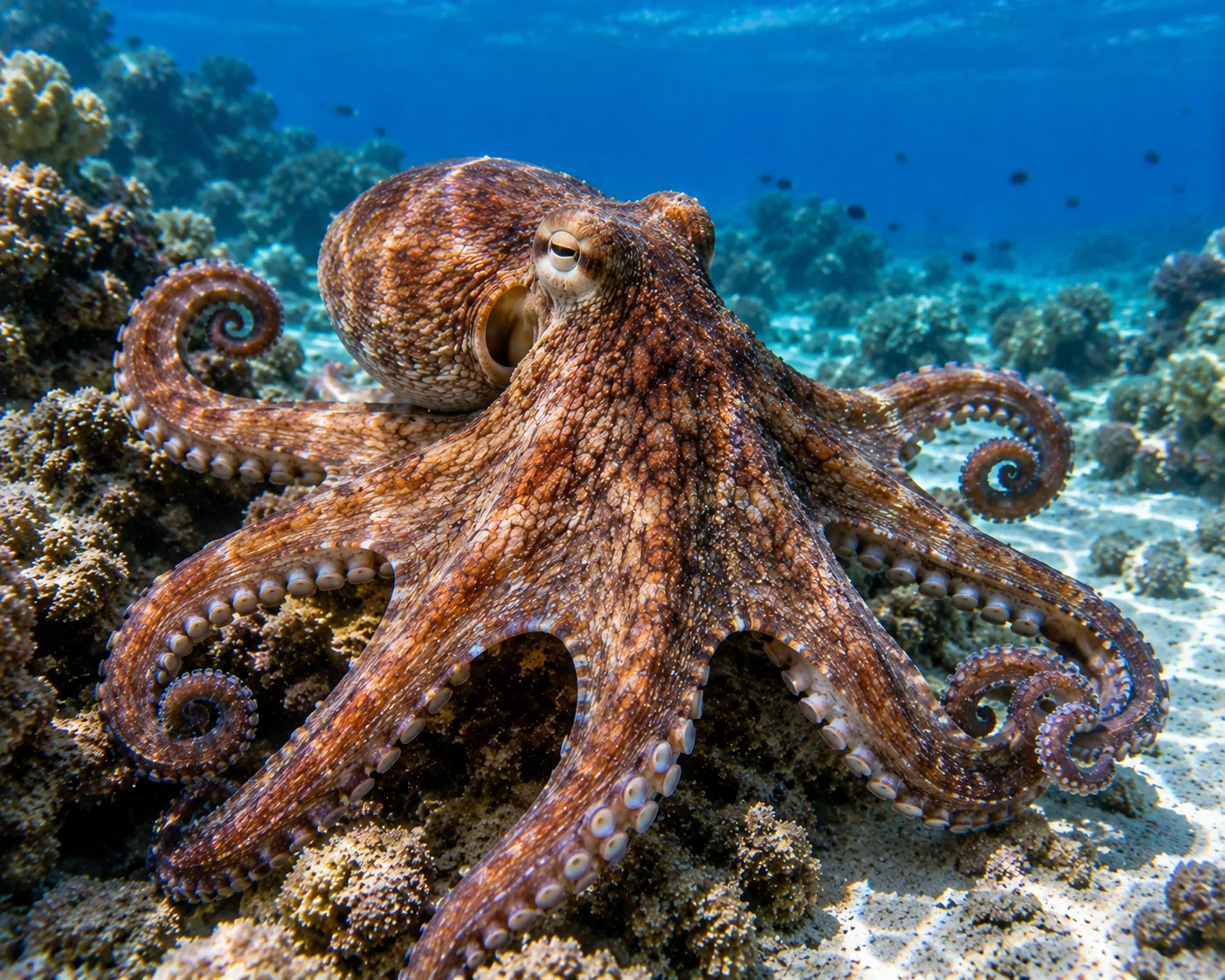
Moray eels, octopus, rays and sea turtles when habitat and daily conditions align.
Spinner dolphins around known habitats such as Shaab El Erg, without any guarantee of an encounter.
Dugongs occur in the Egyptian Red Sea but are much more associated with southern areas around Marsa Alam.
// LIVING COLOR
The fish that make the reef feel alive
Small and medium reef fish provide most of the color and constant movement seen during an ordinary snorkeling day. Learn the body shapes, patterns and behavior—not just the names.
Common reef group
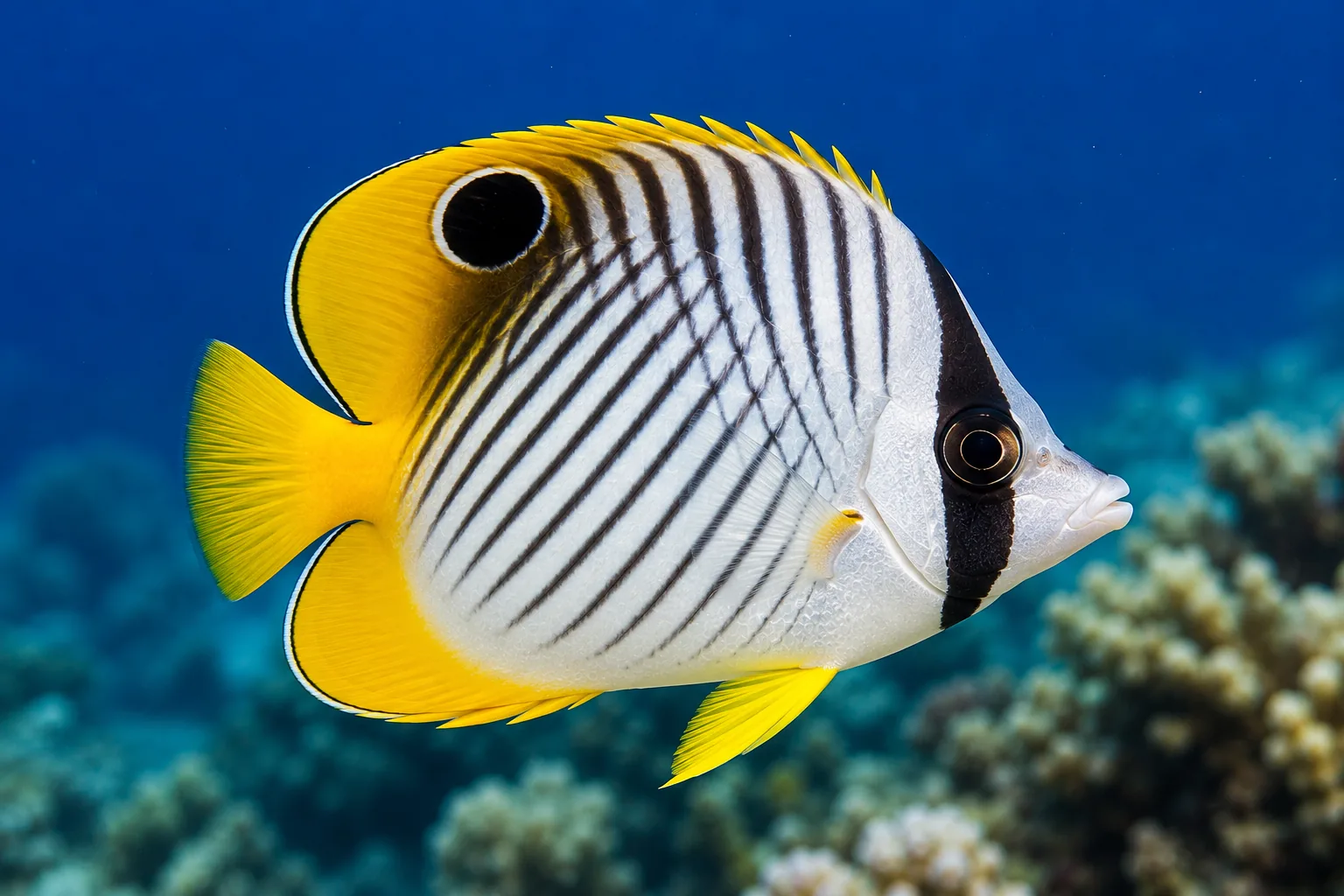
Butterflyfish
Look for bright patterns, dark eye bands and pairs feeding close to coral.
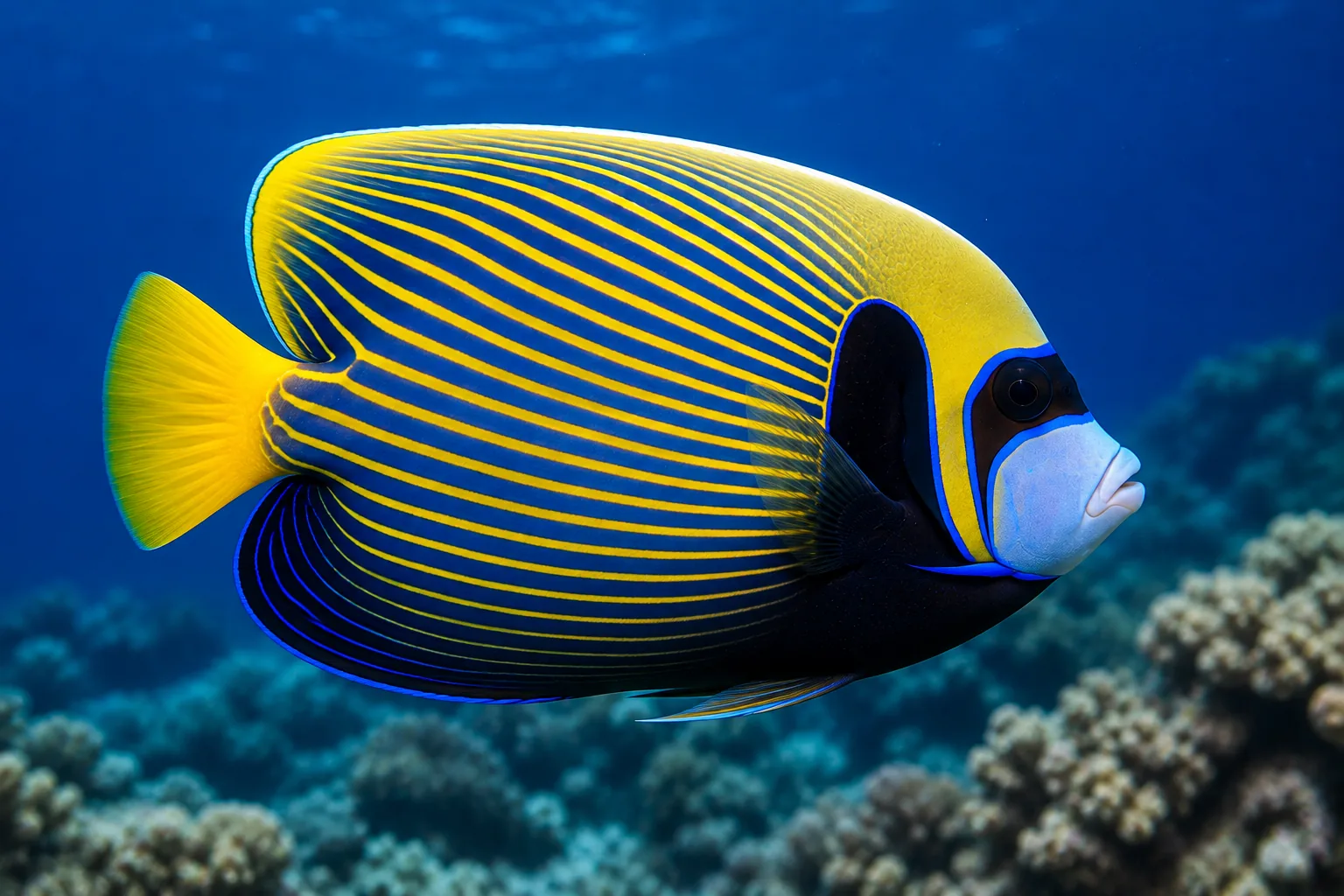
Bold reef resident
Emperor angelfish
Deep, flattened bodies and unmistakable blue-and-yellow markings.
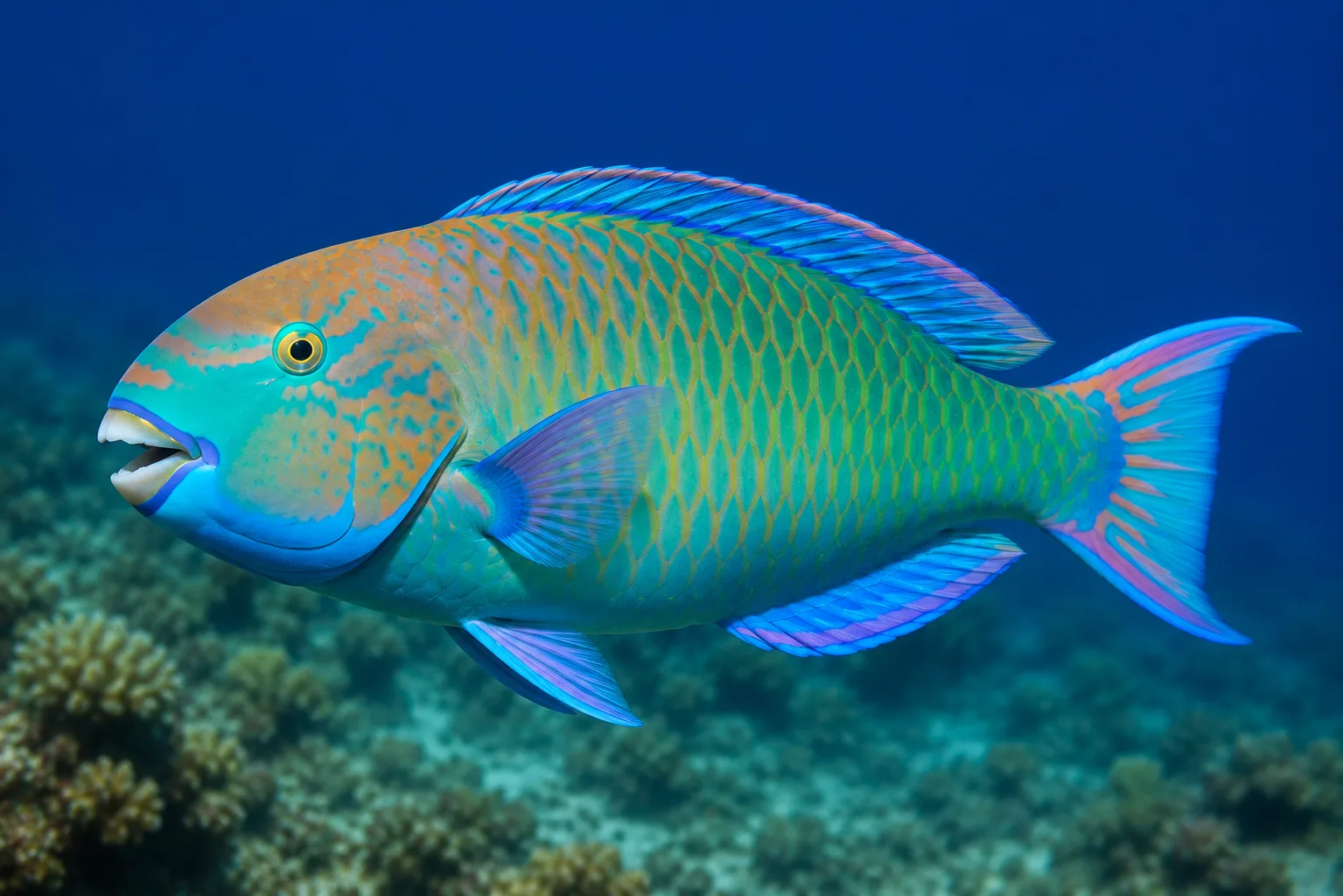
Daylight grazer
Parrotfish
A beak-like mouth scrapes algae from reef surfaces; colors vary with age and life stage.
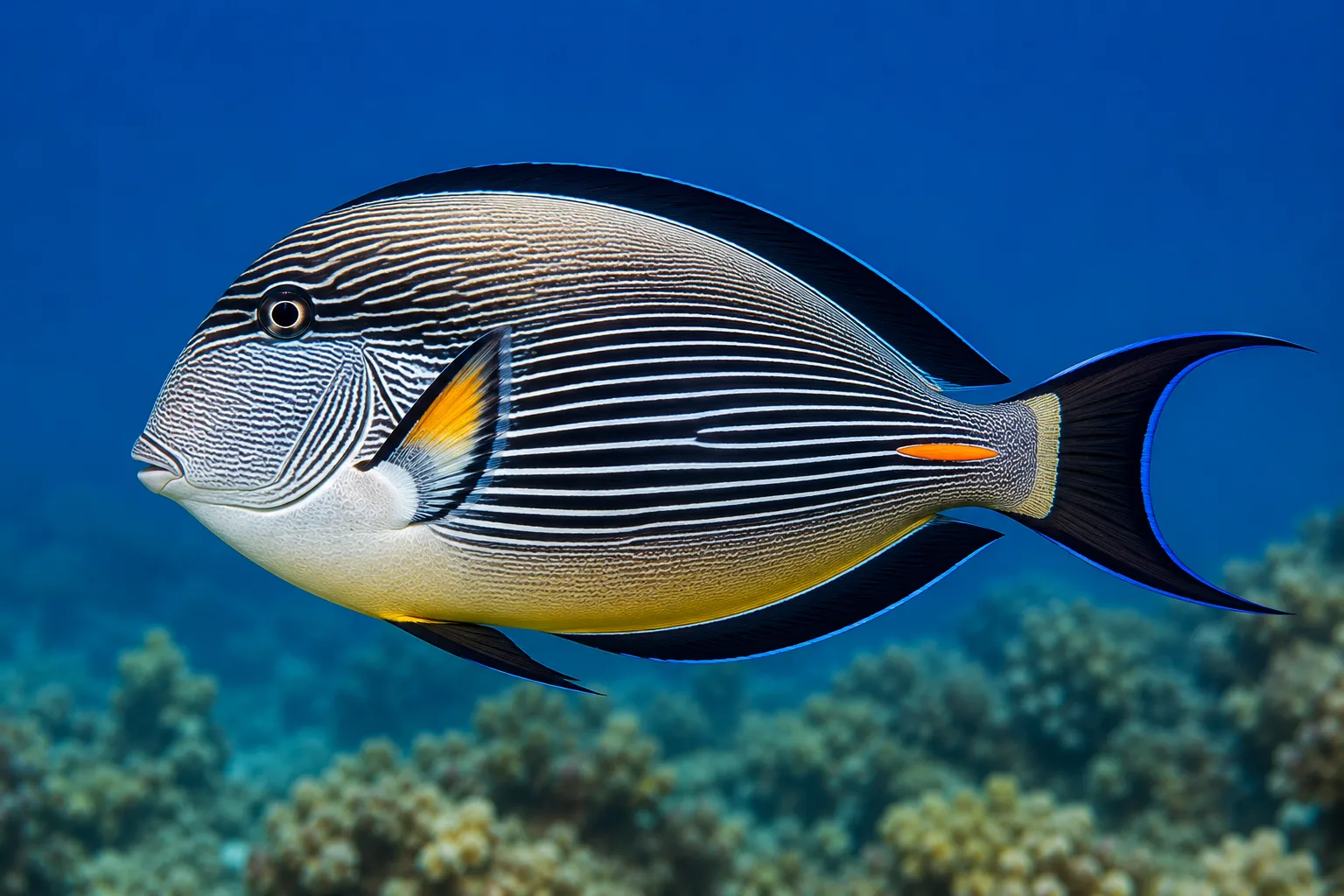
Red Sea specialist
Sohal surgeonfish
A powerful reef grazer named for the sharp blade-like structure near its tail.
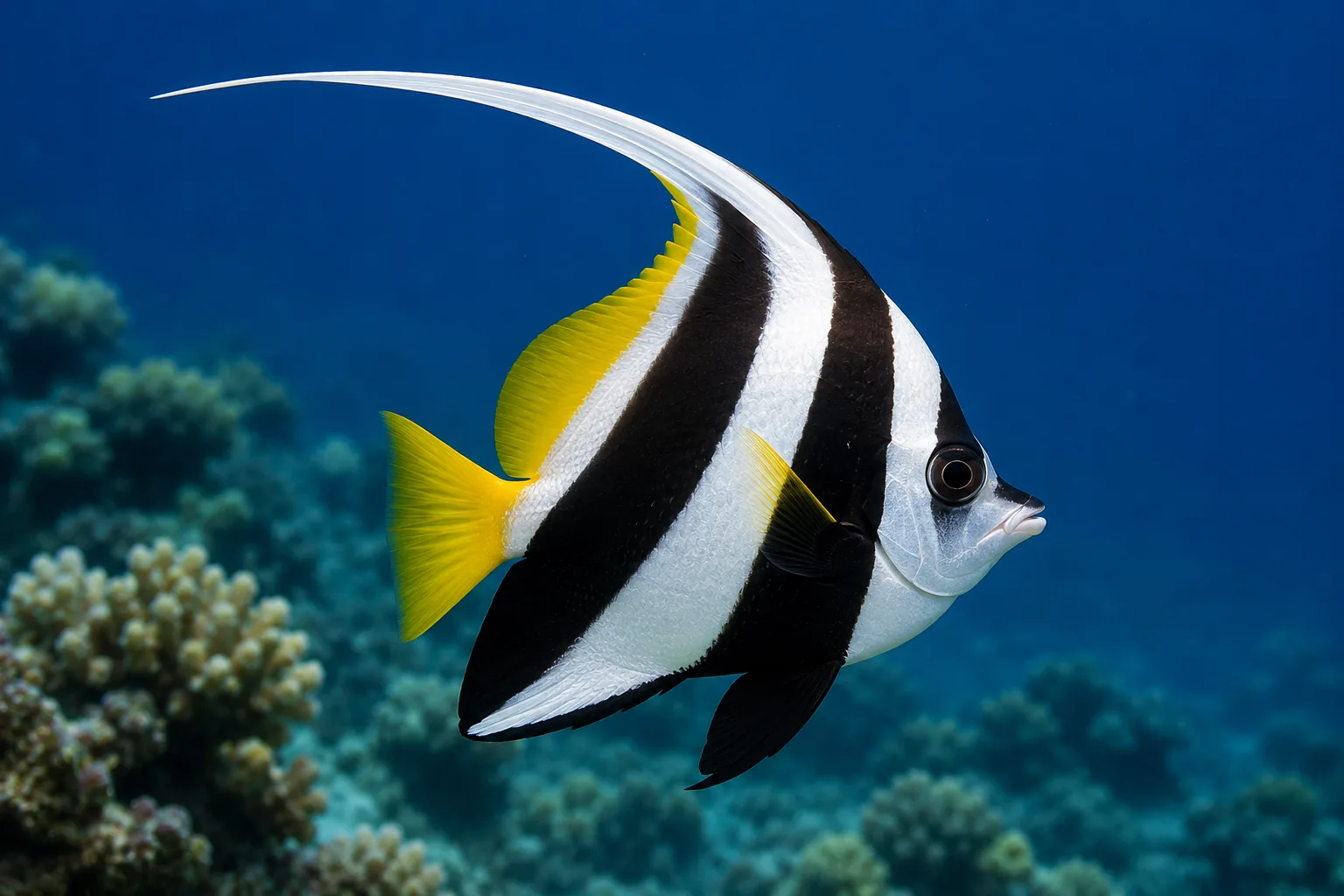
Reef silhouette
Bannerfish
High-contrast black, white and yellow markings make this fish easy to recognize.
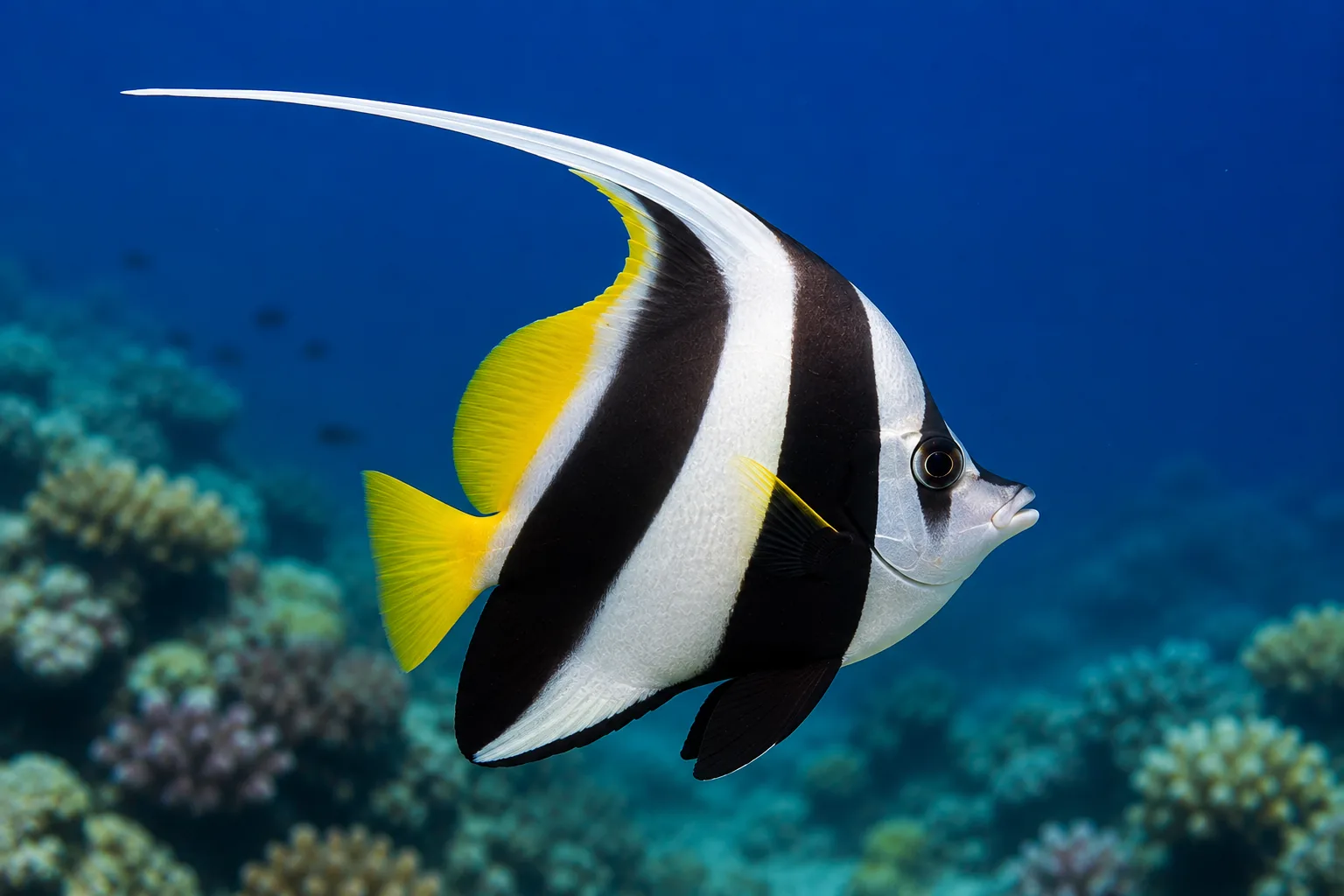
Pattern study
Moorish idol
A compressed body, long dorsal filament and graphic bands stand out in clear water.
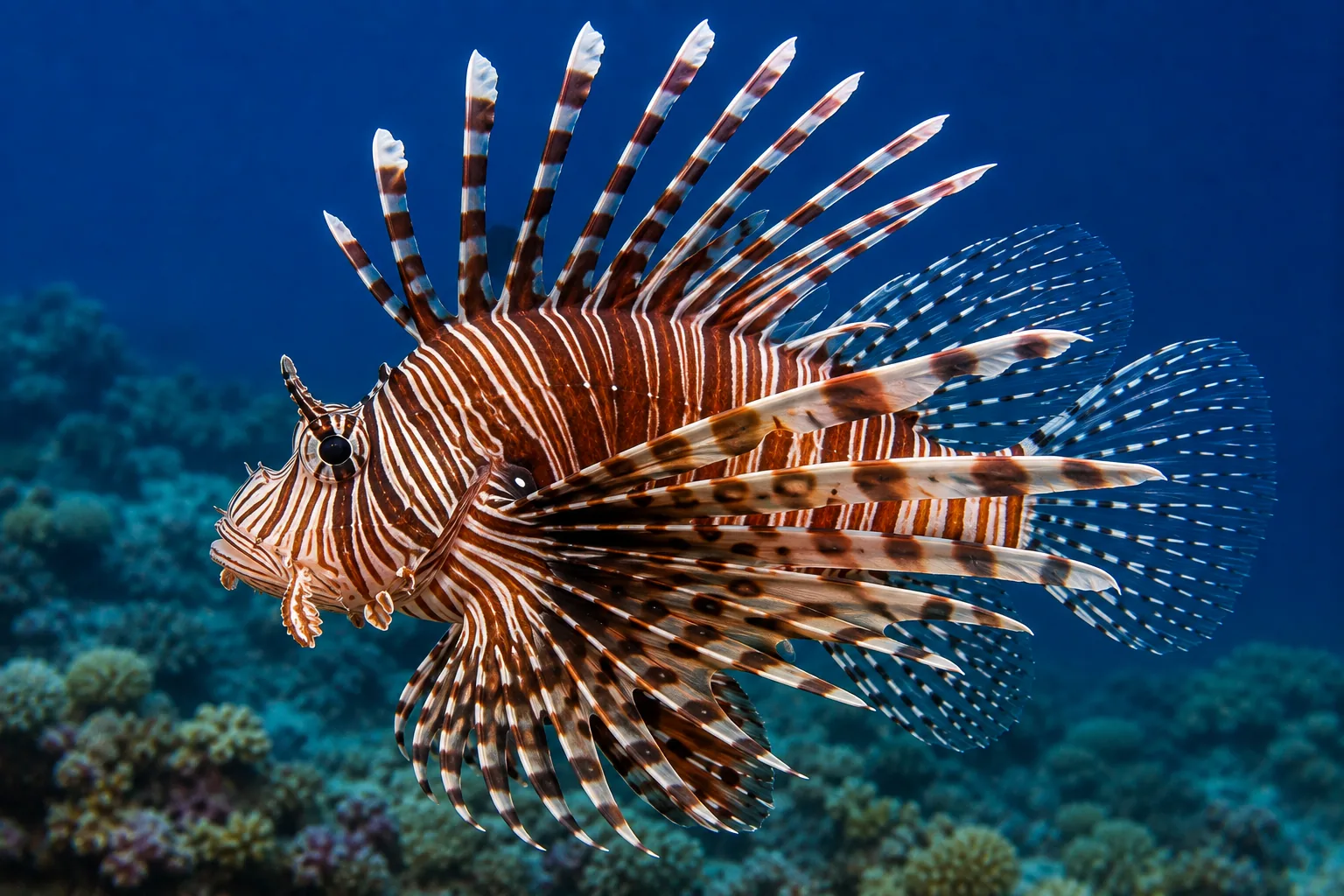
Venomous spines · do not touch
Lionfish
One of the reef's most dramatic predators. A calm viewing distance is all that is required.
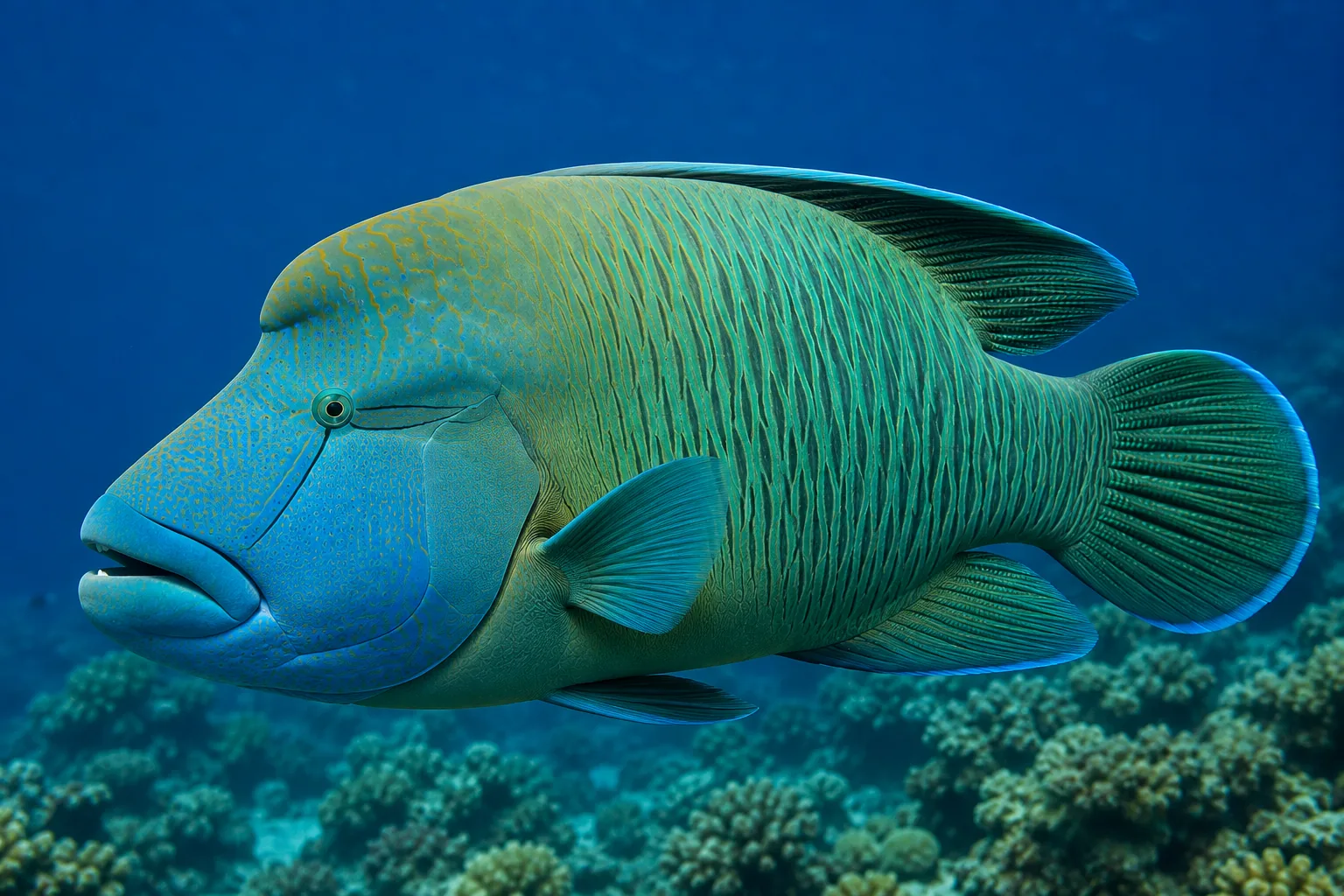
Larger reef resident
Napoleon wrasse
Wrasses range from tiny flashes of color to impressive larger individuals.
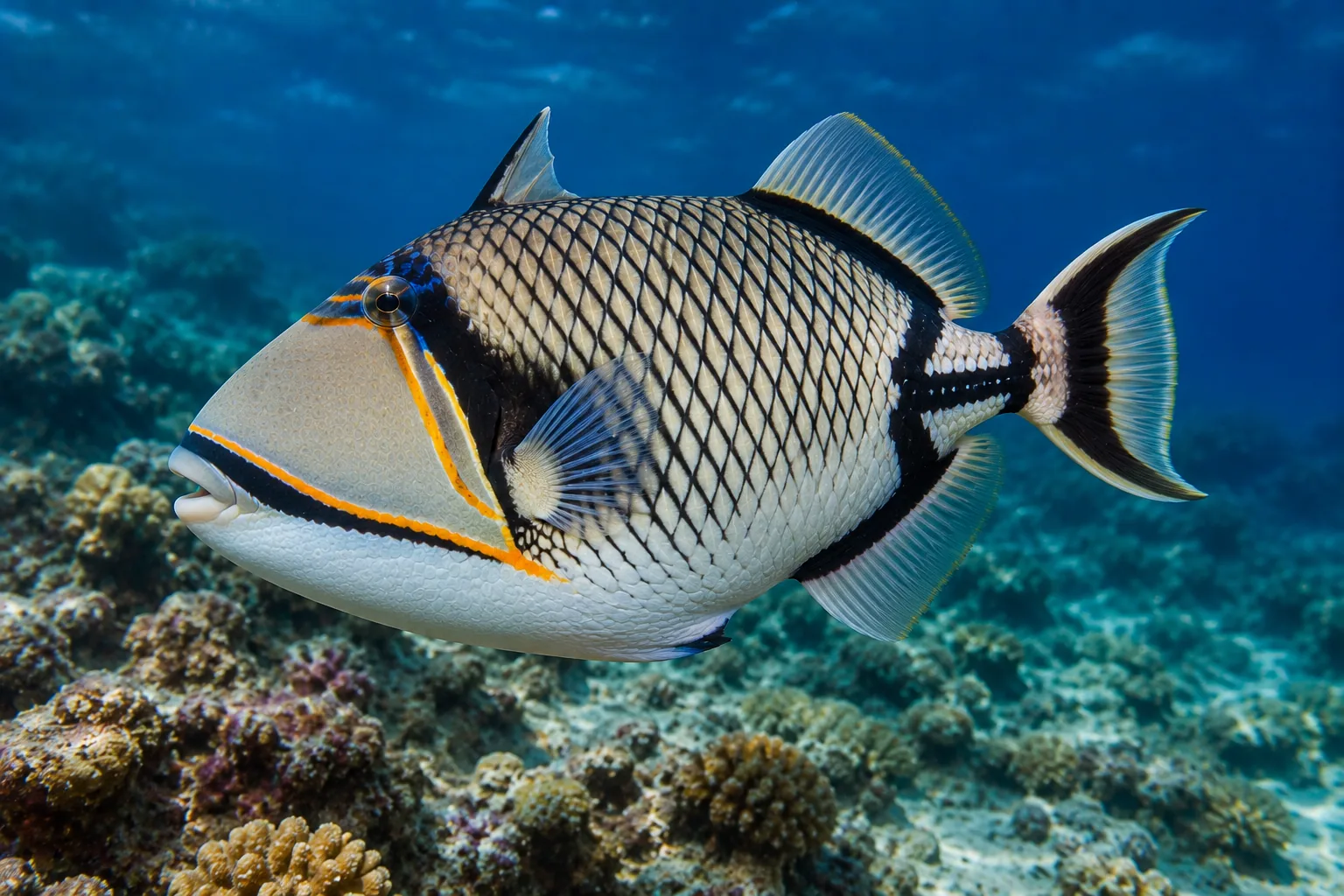
Observe with space
Triggerfish
Distinctive swimmers with powerful jaws; some become territorial near nesting areas.
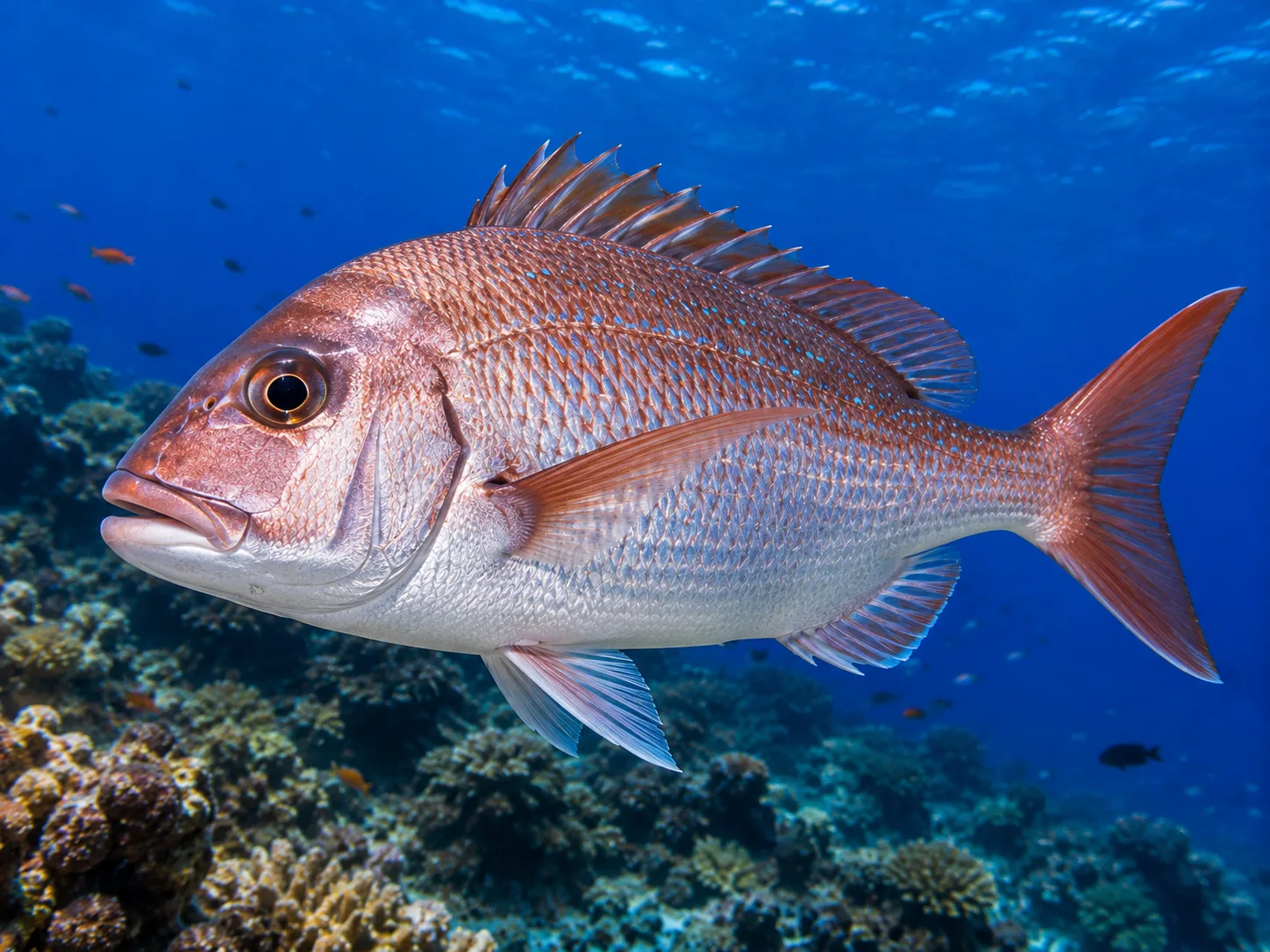
Reef-edge visitor
Snapper
Often seen cruising reef structures or gathering where food and current meet.
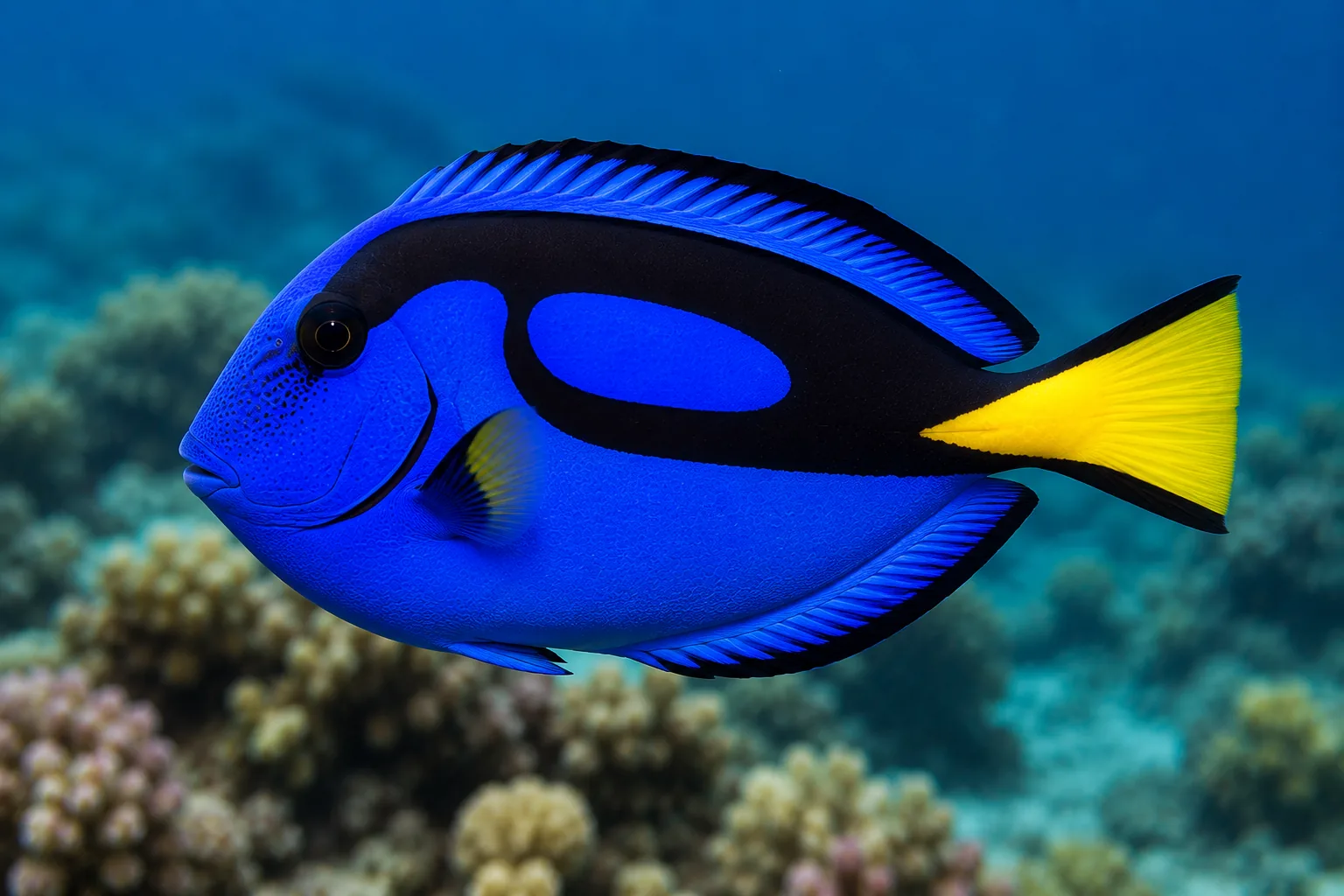
Surgeonfish family
Blue surgeonfish
Surgeonfish frequently graze algae over reef flats, alone or in moving groups.
Look around host anemones
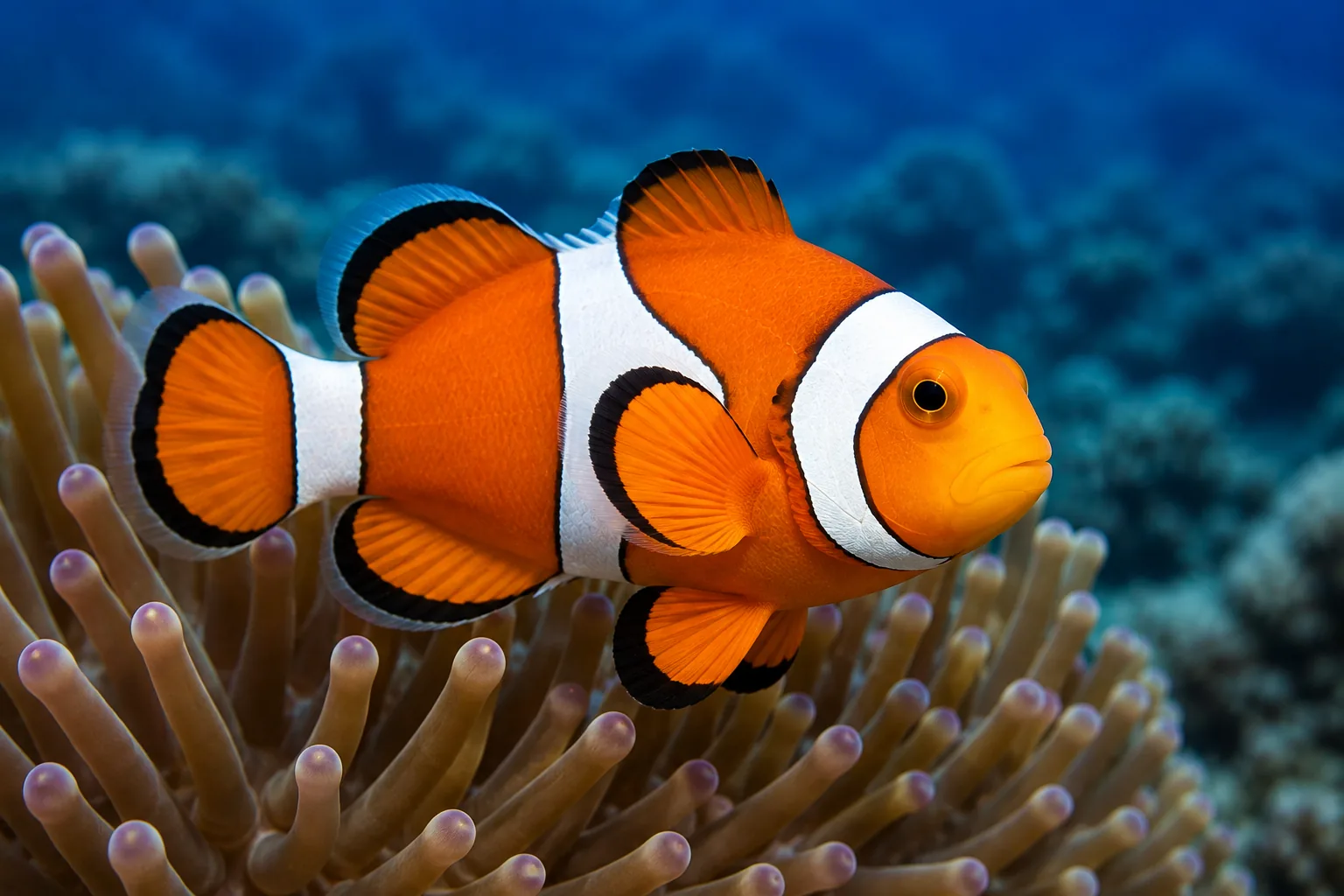
Red Sea anemonefish
Observe from the side and avoid hovering directly above an occupied anemone.
// SIGNATURE ENCOUNTERS
The moments everyone hopes for—and nobody can promise
Larger animals are unforgettable precisely because the encounter belongs to them. Keep your distance, follow the guide and allow wildlife to choose whether it remains nearby.
Location-dependent · never guaranteed
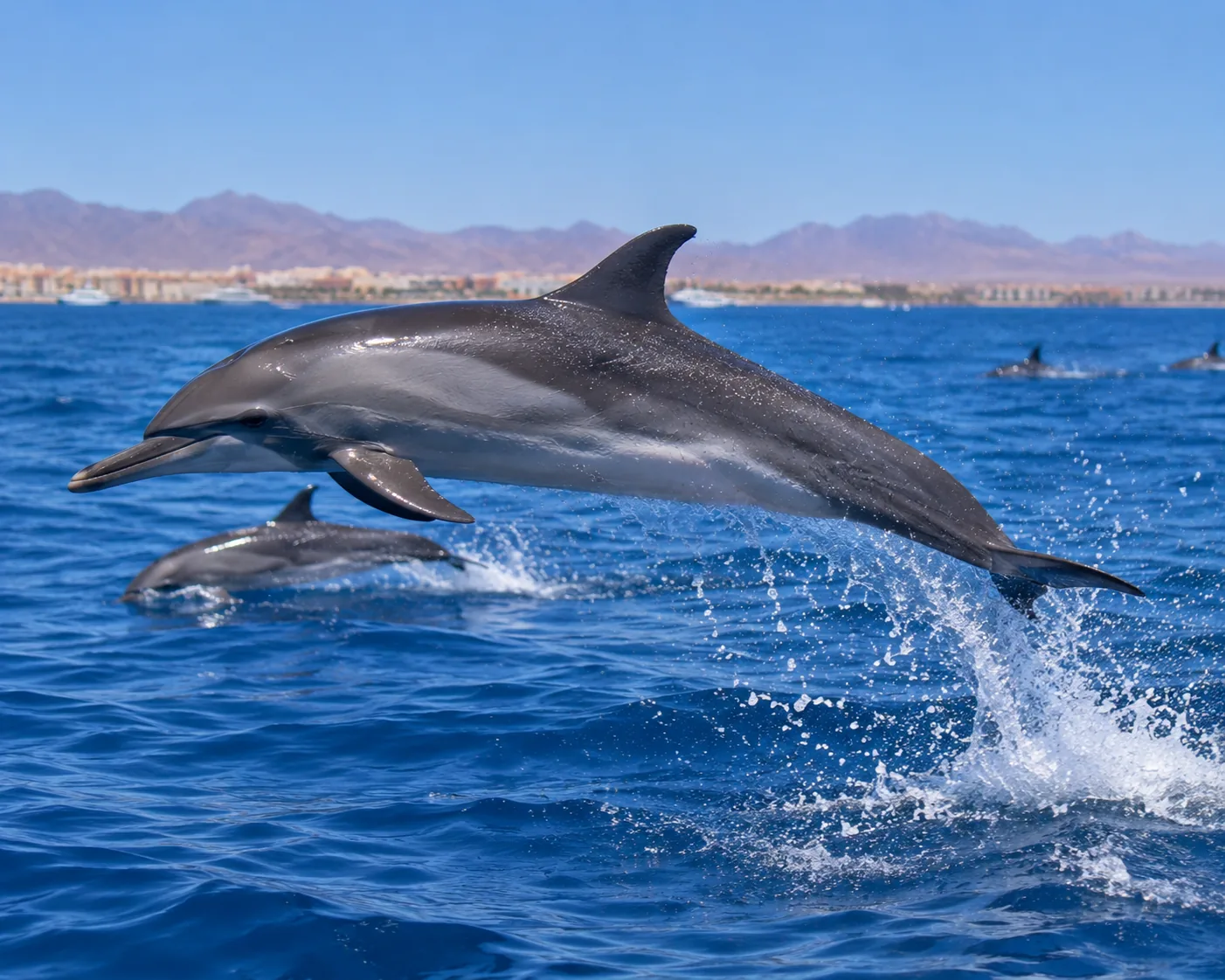
Spinner dolphins
Shaab El Erg is well known for spinner dolphin encounters. Enter calmly when permitted, never chase or surround a pod, and give resting animals space.
Occasional highlight
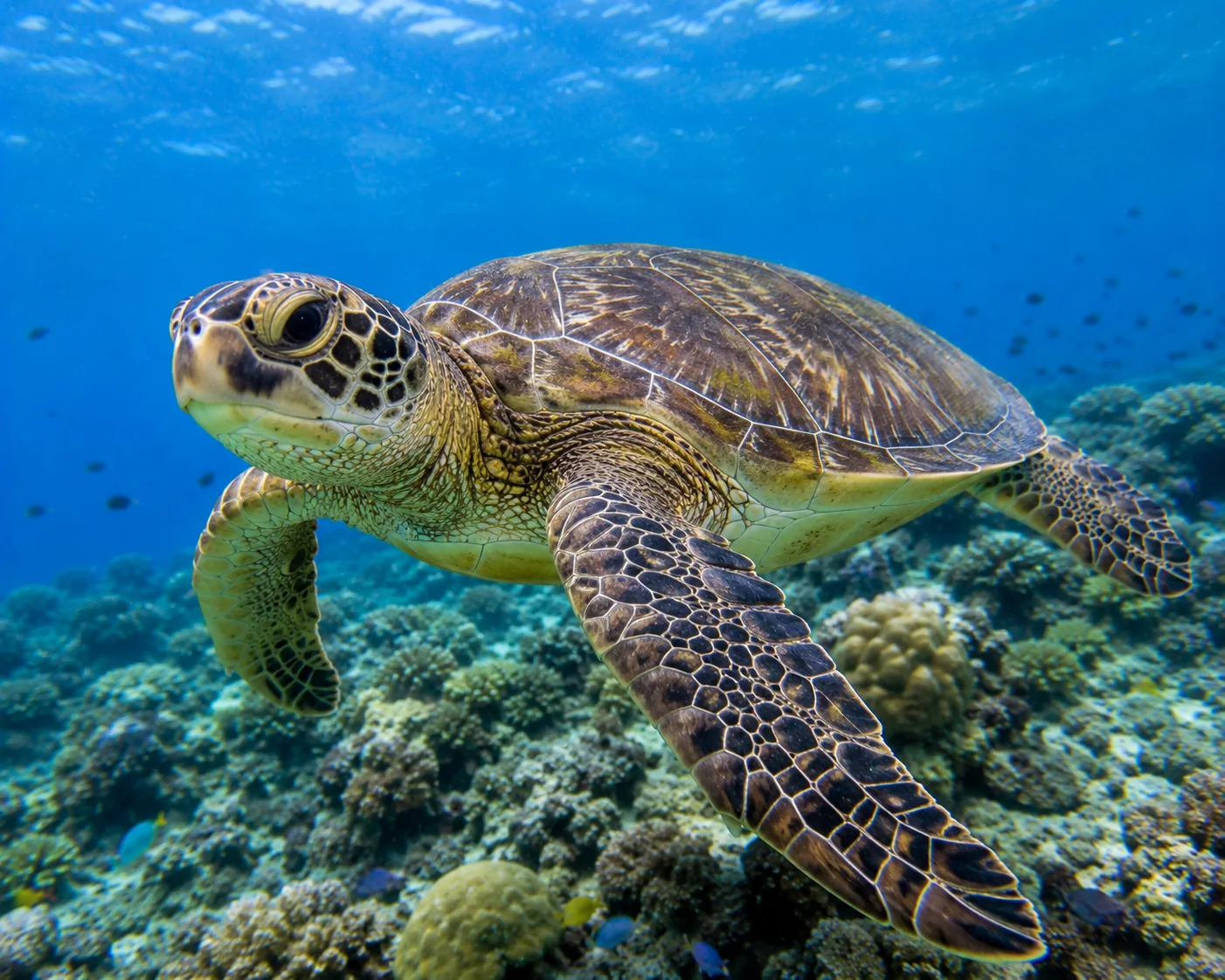
Sea turtles
Stay to the side and never block a turtle's path to the surface—it must breathe air.
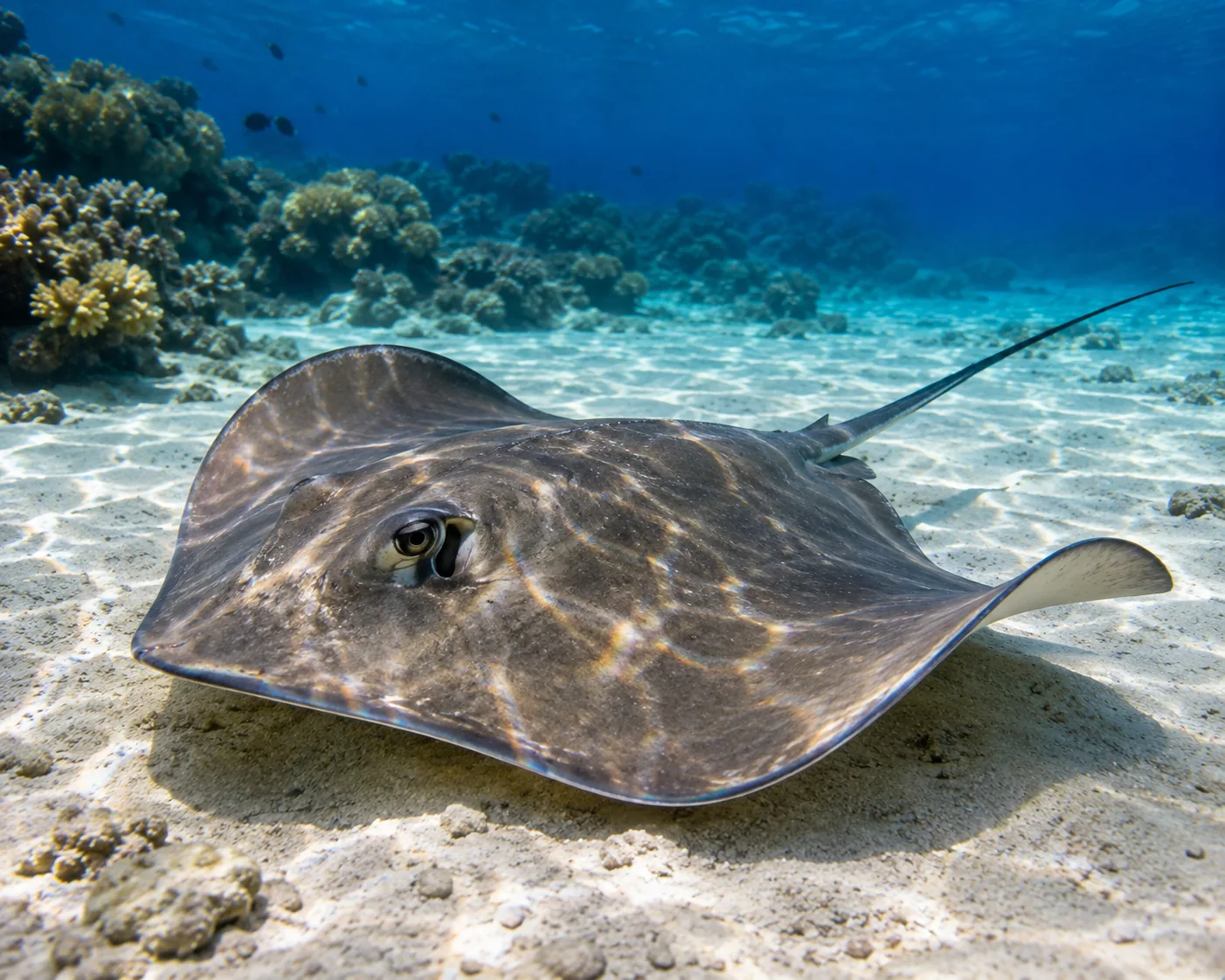
Sandy habitat · site-dependent
Stingrays
Some rays rest partly buried in sand. Never step toward or deliberately crowd one.
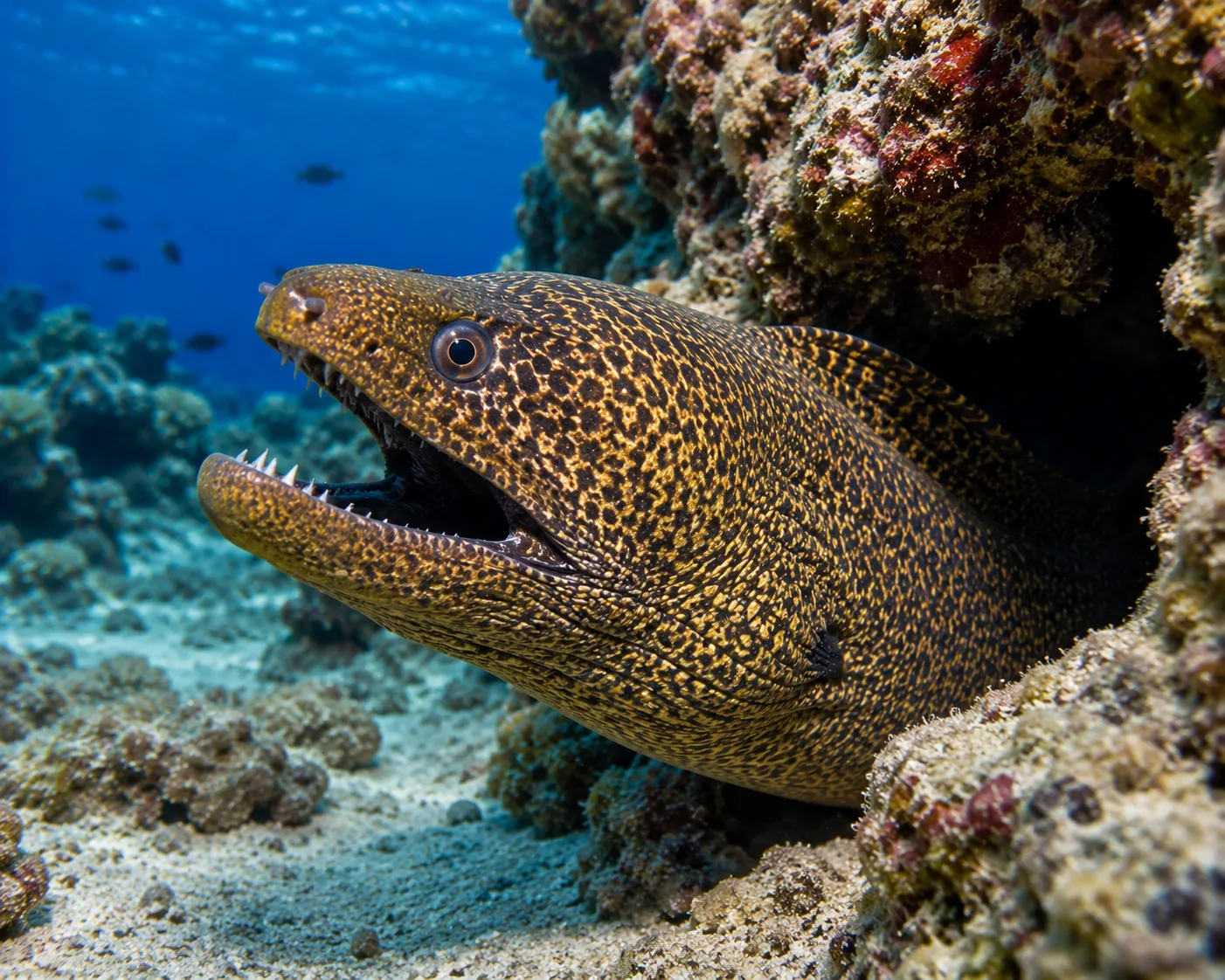
Reef crevices · occasional
Moray eels
A moray may shelter with only its head visible. Repeated mouth opening is commonly linked to respiration—not an invitation to feed or touch it.
// BEYOND THE CORAL GARDEN
Where the reef edge meets open blue
Open-water visitors and larger reef fish are less predictable than the everyday color of shallow coral gardens. Exact sightings depend strongly on site, depth and current.
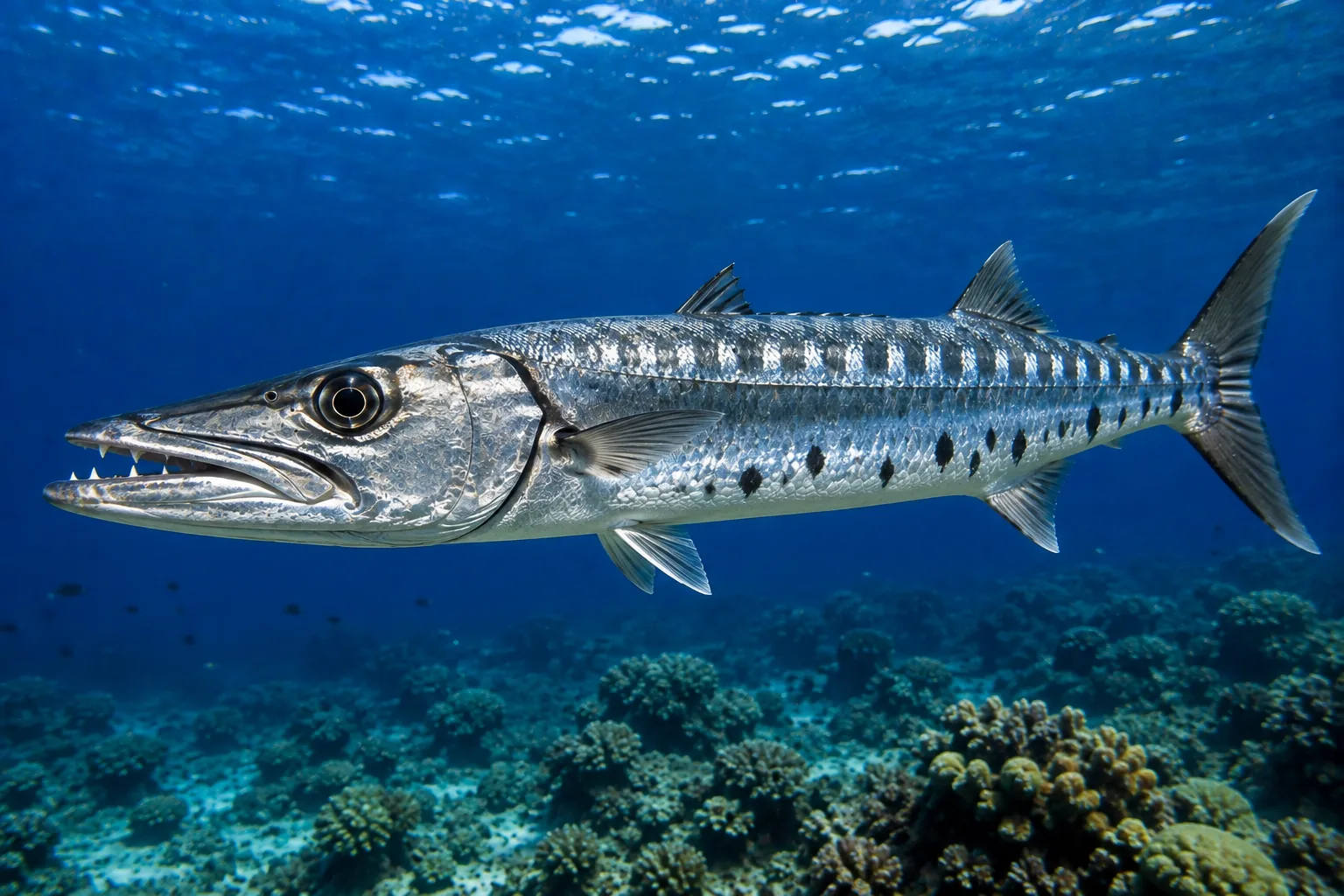
Barracuda
Streamlined hunters sometimes patrol reef edges and open-water channels.
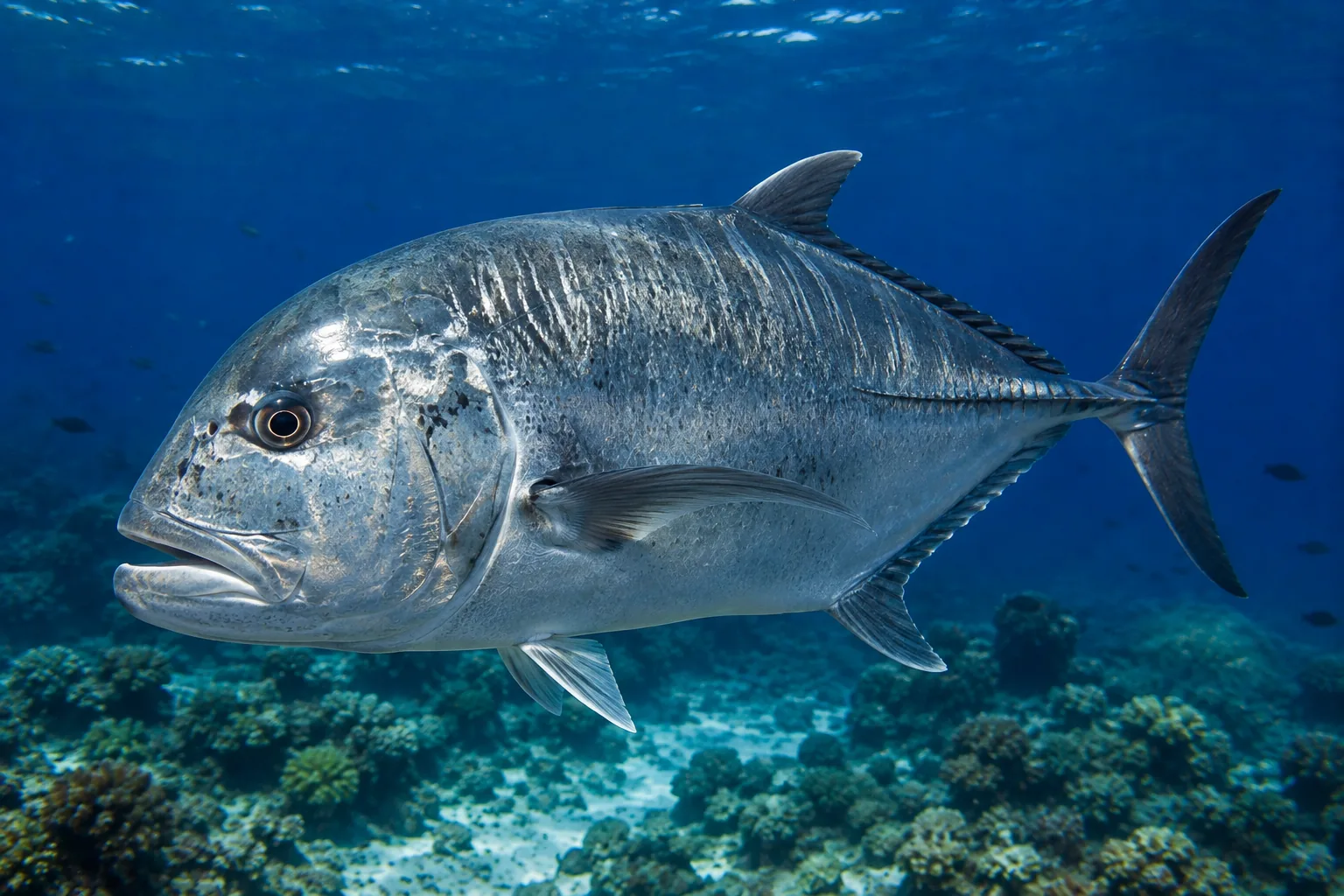
Giant trevally
A powerful larger fish associated with reef edges and moving water.
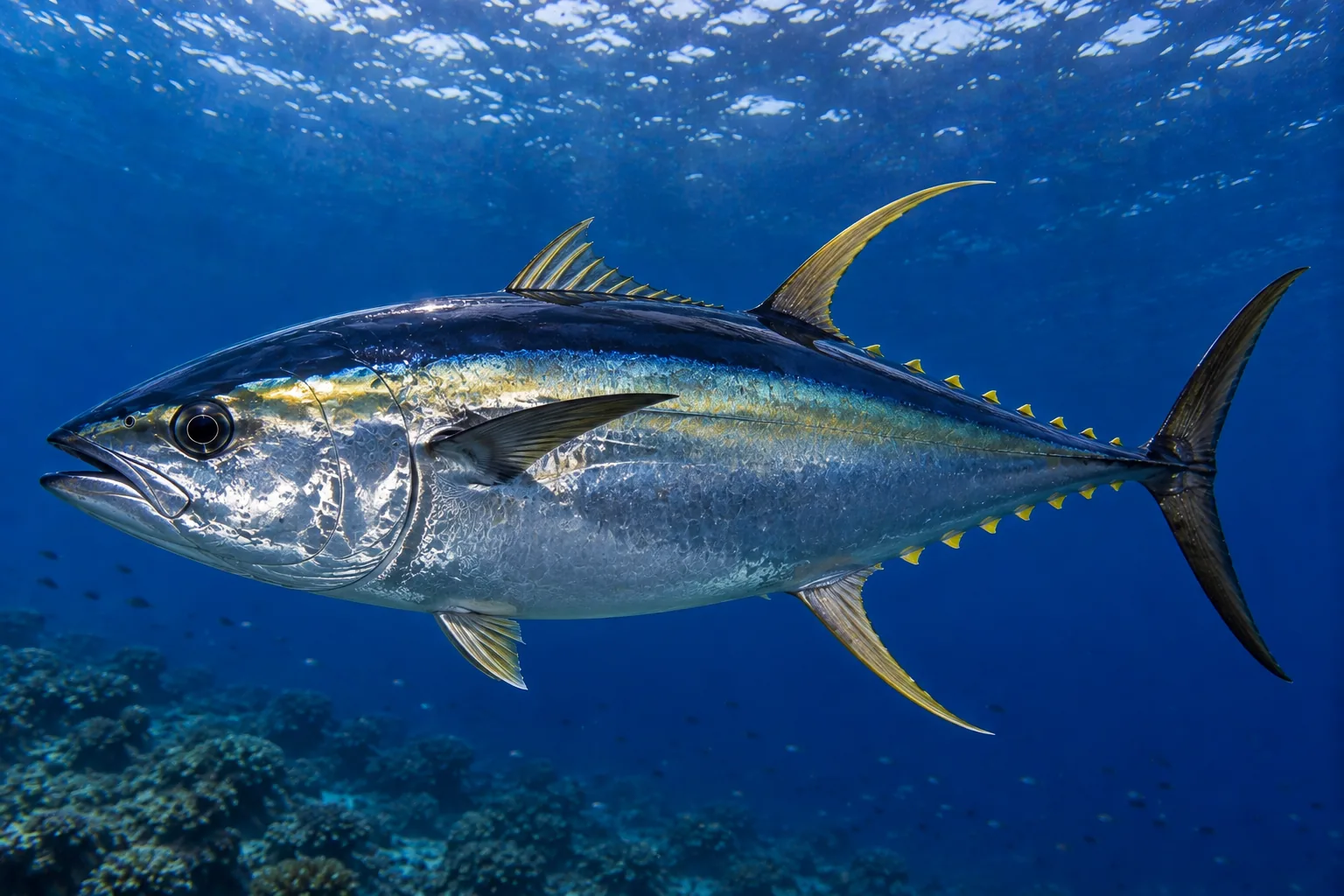
Tuna
Fast open-water movement is a lucky, site-dependent sighting—not an everyday promise.
// READ THE HABITAT
Where you look changes what you notice
Understanding habitat is the simplest way to make sense of sightings. Bare sand is not empty, and open water does not behave like a coral garden.
Coral gardens
Best for butterflyfish, angelfish, parrotfish, damselfish, wrasses and anemonefish in strong natural light.
Reef edges
Look for schooling fish, fusiliers, larger reef residents and occasional pelagic visitors beside deeper water.
Sandy lagoons
Rays, goatfish and bottom dwellers may rest, feed or hide between scattered reef patches.
Seagrass
Important nursery and feeding habitat for juvenile fish, grazing animals and occasional turtles.
Open water
Dolphins, schooling fish and larger visitors are possible, but less predictable than reef encounters.
// THE REEF CODE
The best encounter leaves no trace
Protecting the reef is not an optional extra. It keeps both the ecosystem and the visitor experience alive.
Never stand on coral
Float on your back or move only to a sandy area when the guide confirms it is safe.
Control your fins
Keep fins away from coral and sediment. Kicking sand reduces visibility and disturbs animals.
Take nothing
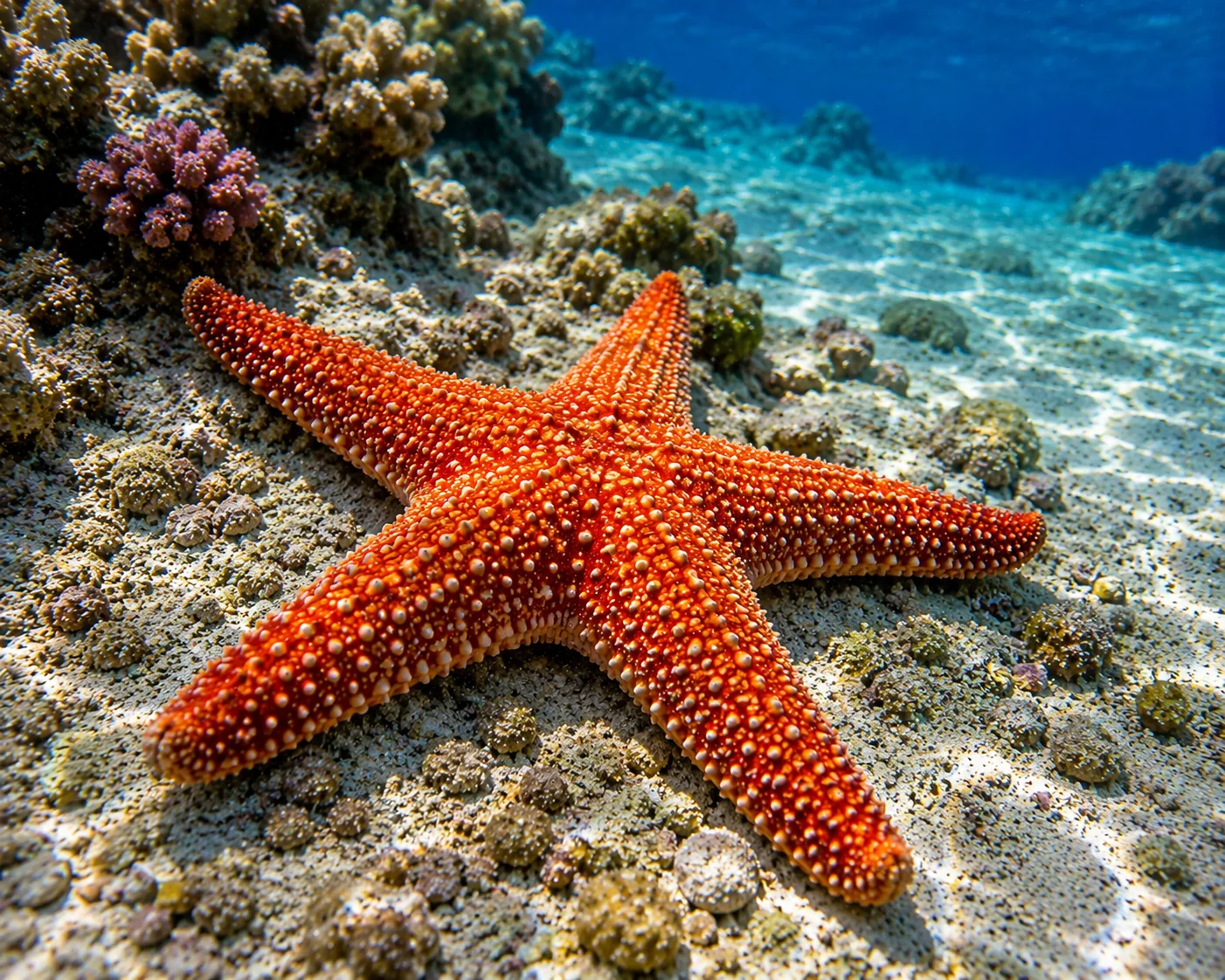
Leave coral, shells, sea stars, sea cucumbers and every living organism exactly where it belongs.
Do not feed fish
Feeding changes natural behavior and can damage the ecological balance at busy sites.
Give wildlife space
Never chase dolphins, turtles or rays for a photograph. Let the animal choose the distance.
Follow the crew
Safe entry points, current and wildlife rules change. Professional instructions take priority.
// WHEN TO GO
Marine life is present all year
There is no month when the reef simply switches off. What changes is the comfort above water, wind, sea state and the character of the day.
Comfortable balance
Pleasant air temperatures and enjoyable snorkeling conditions on suitable days.
Warm sea days
Very warm weather and water; early starts can feel more comfortable.
Warm water
Often combines warm water with pleasant conditions above the surface.
Watch the wind
Snorkeling remains possible; a wetsuit helps when wind and cooler air make exits feel cold.
// YOUR REEF LOG
0 / 20Mark what you spot. Your checklist stays in this browser, but every sighting remains a privilege—not a target to chase.
// BEFORE YOU SNORKEL
Questions travelers ask before choosing a sea day
What fish can you see while snorkeling in Hurghada?
Common sightings include butterflyfish, angelfish, parrotfish, surgeonfish, wrasses, damselfish, goatfish and triggerfish. Exact species vary by reef and day.
Can you see dolphins in Hurghada?
Yes. Spinner dolphins occur around Hurghada and Shaab El Erg is particularly well known, but encounters are never guaranteed because the dolphins are wild.
Can you see turtles in Hurghada?
Sea turtles occur in the Red Sea and are occasional highlights around suitable reefs, seagrass and feeding habitat. They are not guaranteed on ordinary trips.
Are there sharks in Hurghada?
Sharks live in the Red Sea, but sightings on standard shallow Hurghada snorkeling trips are much less routine than ordinary reef-fish encounters.
Is Hurghada marine life safe?
Most animals are uninterested in people. Look without touching, never stand on coral and follow the guide around animals with defensive spines or venom.
Can beginners enjoy the marine life?
Yes. Suitable shallow reefs can be excellent for beginners when sea conditions allow. Inexperienced swimmers should use flotation equipment and remain with the crew.
What is the best month for snorkeling?
Snorkeling operates year-round. Spring and autumn are comfortable for many visitors, but wind and sea state matter more than the calendar alone.
Should I touch coral?
No. Coral is living tissue and can be damaged by contact. Never stand, sit or hold onto the reef.
Ready to meet the reef responsibly?
Choose a real Hurghada snorkeling route, then let the day's conditions—not a wildlife promise—shape what you discover.